VEVOR Pressure Washer Review: An Honest Hands-On Test
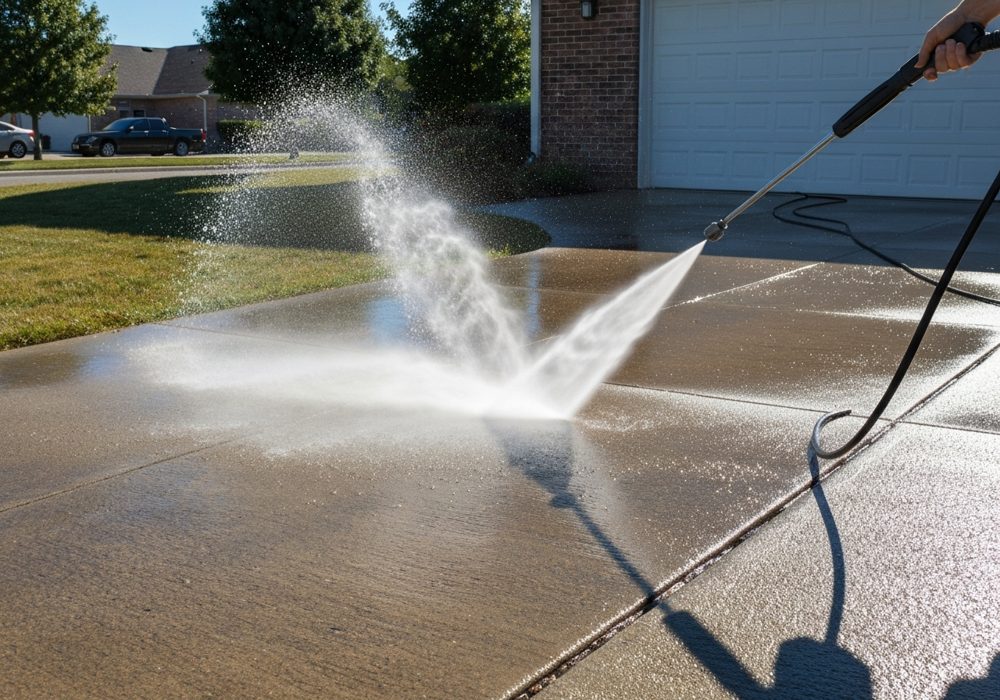
A pressure washer is the rare garden purchase where a budget brand and a premium one do almost the same job. We spent a spring blasting patios, decking, fencing, garden furniture and a very grubby family car with a VEVOR electric pressure washer to see exactly how far the value stretches — and where it runs out.
The short verdict
Pressure and flow in the real world
Let's deal with the headline number first, because it's where pressure washers mislead buyers. The big peak PSI on the box is the unloaded cut-off pressure — the figure the pump reaches with the trigger released. What actually cleans is the pressure at the nozzle under load, combined with flow. On our test unit, the peak rating was advertised in the 2,000-plus PSI region; under real cleaning load it settled to roughly 1,700–1,900 PSI, with flow around 1.6–1.8 litres per minute depending on nozzle.
That is genuinely enough. Green algae lifted off north-facing slabs in a single pass, two years of grime came off the decking with the 25° nozzle, and the car went from filthy to rinse-ready with a foam cannon and the wide fan. The pencil-jet 0° nozzle is brutally effective on stubborn patio stains but should never go near paint, pointing or render.
Build quality and the bits in the box
The motor unit, trolley and lance feel solid for the money. The on-board reel (where fitted) is convenient, and the click-fit nozzles are a pleasant surprise — better than the loose, easily-lost ones on some rivals. Where the cost-cutting shows is in the consumables and connectors: the supplied high-pressure hose is stiff and on the short side, the trigger gun's plastic is unremarkable, and the tap connector is the cheapest part of the package. None of that stops it working on day one, but they are the parts most likely to need replacing first.
Hose, nozzles and accessories
The nozzle set covers the jobs most people buy a washer for, and the foam cannon is included or cheaply added depending on bundle. The hose length is the limitation worth planning around: you'll often want a longer aftermarket high-pressure hose so you can leave the unit by the tap rather than dragging it across wet decking. A longer garden-hose feed to the inlet solves the supply-side reach. Budget a small upgrade or two and the package becomes genuinely pleasant to use.
Noise
As an electric induction-type unit it's far quieter than any petrol washer — conversation-level rather than ear-splitting. There's a clear motor hum and a noticeable click as the pressure switch cycles when you release the trigger, but nothing that will upset the neighbours on a Sunday morning. Hearing protection isn't necessary; it's a markedly more civilised tool than a petrol equivalent.
Duty cycle: the real limit
This is the honest boundary. The pump and motor are sized for domestic, intermittent use. We were comfortable with 20–30 minute sessions and short breaks, and never cooked it. But it is not a machine for hours of continuous commercial blasting — push a consumer washer like that and the pump and switch are what fail. If you're doing a paid cleaning round or daily yard duty, step up to a pump-driven professional unit and don't look back.
Pros
- Strong real-world pressure for patios, decking, cars and furniture
- Excellent value versus household-name rivals
- Useful click-fit nozzle set plus foam cannon
- Quiet, clean electric operation
- Easy to assemble and store
Cons
- Short, stiff supplied high-pressure hose
- Cheap tap connector and average trigger gun
- Consumer duty cycle — not for continuous commercial use
- Needs a steady mains-fed water supply
Who it's for
If you own a home with a patio, drive, decking or a couple of cars and want a capable washer without paying a premium badge tax, this is a smart buy — it does the overwhelming majority of what a unit costing twice as much does. If you clean for a living or need all-day endurance, it isn't your tool. For the wider judgement on that trade-off, read our honest "is VEVOR worth it?" comparison, and browse the rest of the home & garden hub for cross-shopping.
Bottom line
The VEVOR pressure washer is a textbook value win in a category that rewards it. Add a longer hose, treat the duty cycle with respect, and it'll keep your patios and cars clean for years for a fraction of the premium price. Just buy it for what it is — a very good domestic washer — and not for a job it was never built to do.
Frequently asked questions
What is the real pressure of the VEVOR pressure washer?
Marketing peak figures are the unloaded cut-off pressure. In real cleaning our test unit held roughly 1,700–1,900 PSI at the nozzle under load, which is plenty for patios, decking, cars and garden furniture.
Is the VEVOR pressure washer good for cars?
Yes, with the 25° or 40° nozzle or a foam cannon. Keep the lance moving and avoid the 0° pencil jet on paint. It strips road grime and bug splatter easily without being aggressive enough to risk damage when used sensibly.
How long can a VEVOR pressure washer run continuously?
It is a consumer-duty machine. We were comfortable running 20–30 minute sessions with short breaks. For hours of back-to-back commercial use you want a pump-driven professional unit instead.
Does it need its own water supply?
It connects to a standard garden tap and needs a steady feed. It is not designed to draw from a static water butt without a booster, so plan your hose run to the mains tap.