VEVOR has become the default first stop for café owners, ghost kitchens and small caterers trying to kit out a commercial space without taking out a second loan. We have spent the past two seasons running its kitchen line in real service conditions, and the picture is more nuanced than either the marketing or the angry forum posts suggest.
Who this gear is actually for
VEVOR commercial kitchen equipment sits in a specific lane: it is for the operator who needs real commercial capability at a price tier below the established brands, and who can accept a shorter service life and a bit of fettling in exchange. That describes a huge slice of the market — start-up cafés, food trucks, pop-ups, event caterers, staff canteens, and back-of-house support roles in larger kitchens where a second ice machine or a spare grinder takes pressure off the primary line.
It is not for the high-turnover operator who will run a single machine flat out for twelve hours a day, every day. That duty cycle chews through value equipment quickly, and the maths that makes VEVOR attractive stops working once you are replacing parts every few months. Be honest with yourself about your volume before you buy.
What VEVOR gets right — and where it cuts corners
The pattern repeats across nearly every category we test. The core mechanical job is usually done well: motors have torque, compressors pull the rated load, stainless bodies are heavier than the price suggests. The savings come out of the peripherals — thin water-line fittings, budget gaskets, generic wiring looms, and instruction sheets that read like they lost a fight with a translation engine.
This matters because it tells you where to spend your attention. Budget for replacing the weak fittings up front, keep spares of the consumable seals, and most VEVOR kitchen pieces will give you a genuinely useful working life. Ignore those weak points and you will blame the machine for a five-pound part's failure.
How to prioritise your spend
If your fit-out budget is finite — and whose isn't — spend it where failure hurts most and where quality is hardest to recover after the fact. Our order of priority for most small kitchens:
- Spend up on refrigeration and anything safety-critical. A failed walk-in or a dodgy gas line costs you stock and possibly your licence. This is the wrong place to chase the lowest price.
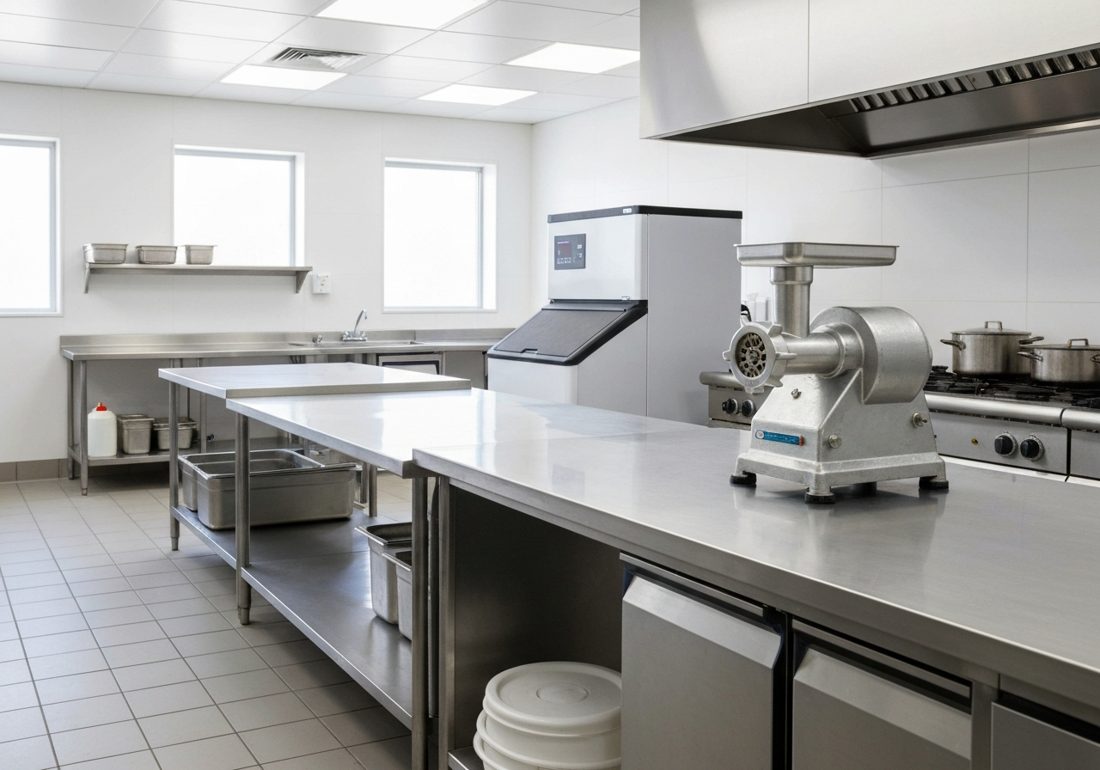
- VEVOR is a smart pick for prep and support equipment. Grinders, slicers, prep tables and worktops are mechanically simple and forgiving. This is where the value tier shines.
- Treat ice making as a middle case. A VEVOR ice maker is fine as a secondary or seasonal unit, but plan the water line carefully and keep it serviced.
- Buy consumable spares with the machine. Gaskets, water filters and seal kits are cheap insurance and turn a two-year machine into a four-year one.
Read our full best VEVOR kitchen equipment guide for the category-by-category breakdown, and our how to choose a commercial ice maker guide before committing to a unit.
Browse our VEVOR kitchen reviews
VEVOR Commercial Ice Maker
Output, cycle time, ice quality and the water-line weak point — a full hands-on review.
VEVOR Electric Meat Grinder
Throughput, duty cycle, included plates and how it copes with batch vs continuous work.
Best VEVOR Kitchen Equipment
Category-by-category picks and how to prioritise a tight fit-out budget.
How to Choose a Commercial Ice Maker
Output sizing, ice shape, water and drainage — pick the right machine first time.
Frequently asked questions
Is VEVOR kitchen equipment good enough for a real commercial kitchen?
For light-to-moderate volume and back-of-house support roles, yes. VEVOR gear is value-engineered: the cores generally work, while fittings, gaskets and wiring are where corners are cut. For a high-turnover line running a single machine all day, a tier-one brand is the safer call.
What VEVOR kitchen item gives the best value?
Prep equipment — meat grinders, slicers and prep tables — tends to give the strongest value, because the mechanical job is simple and tolerances matter less. Refrigeration and ice making are riskier because they depend on sealed systems and water plumbing.
Does VEVOR kitchen gear come with the right certifications?
It varies by SKU and region. Always check the specific listing for ETL, NSF or local electrical marks before buying, especially if a health inspector will see it. Do not assume a category is certified just because one model is.
How long does VEVOR kitchen equipment last?
With sensible duty cycles and routine cleaning, two to four years of service is a realistic expectation for most pieces. Treat it as mid-life equipment, keep spare gaskets and seals on hand, and it will reward you.